
Collage, Draw, Stitch, Repeat
The Magic of Many

Happy Collage Friday!
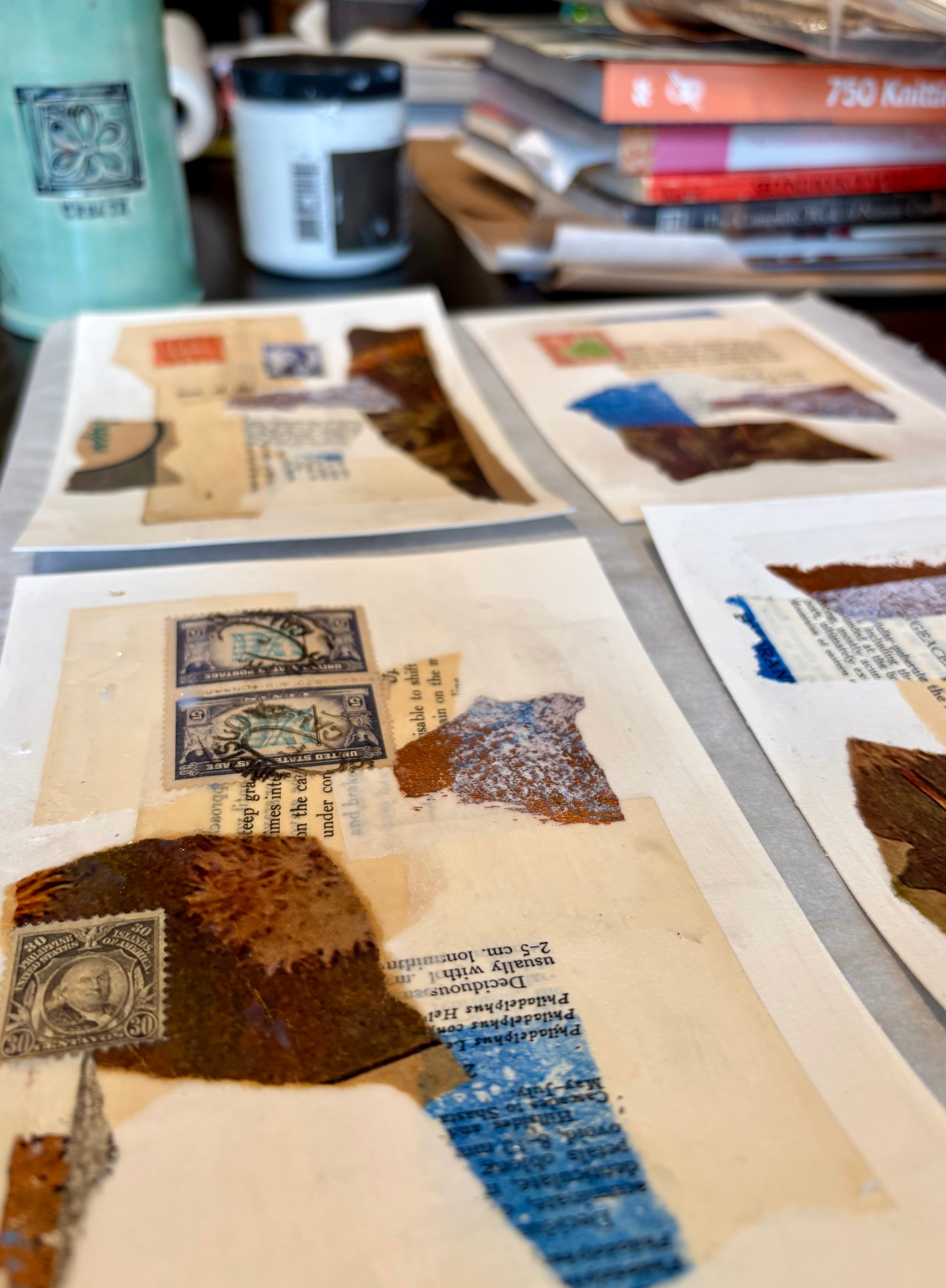
I’m excited to finally be back at my collage table playing with new materials and ideas - thanks to the inspirations I found from my last “Art Travel Kit” post…

… and the gallon baggie of collage materials I pre-sorted for my trip, which provided a consistency to the collages that I don’t get when I work one collage at a time.
I especially enjoyed adding a small Carand’Ache Neocolor II Aquarelle set to my materials list (giving me those splashes of bright color that melt into the background). Not included with my travel post, but also an interesting addition this week - a roll of Richeson Rice Paper - enabling a layer that adheres to the collage like tissue paper, yet can easily take added elements such as drawing and mark-making as well as gentle stitching, before adding it to the collage with some medium.
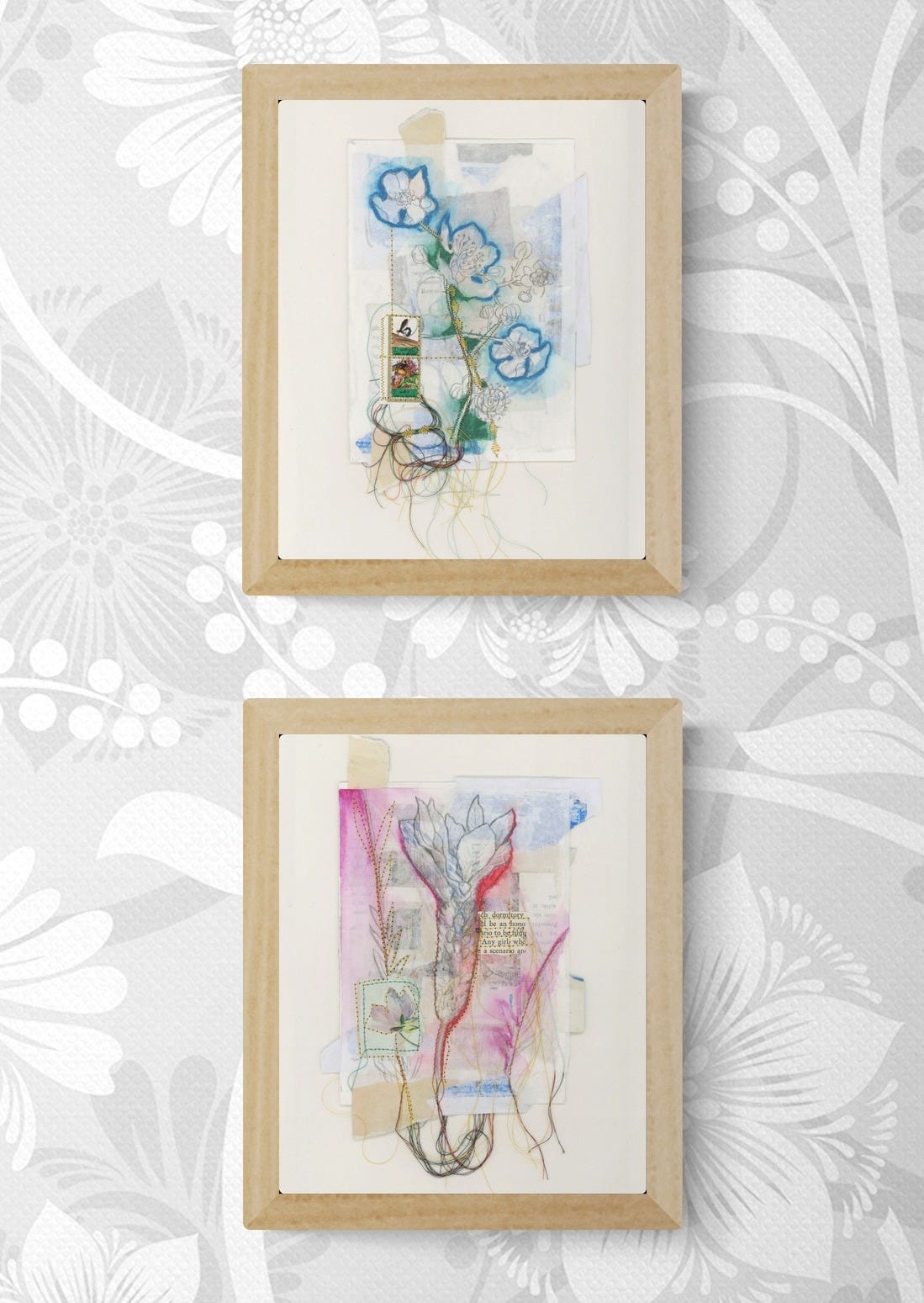
These first two attempts, combining my existing collage materials and techniques with the new items, were interesting enough that I decided to make a larger batch of work to unleash more playfulness and experimentation.
The magic of many…
There is something special that happens when you take an idea and repeat it to create many iterations. A few parameters added to an assigned quantity of work can bring forth an unexpected magic all of its own - something I recently re-learned with my 2025 botanical series.
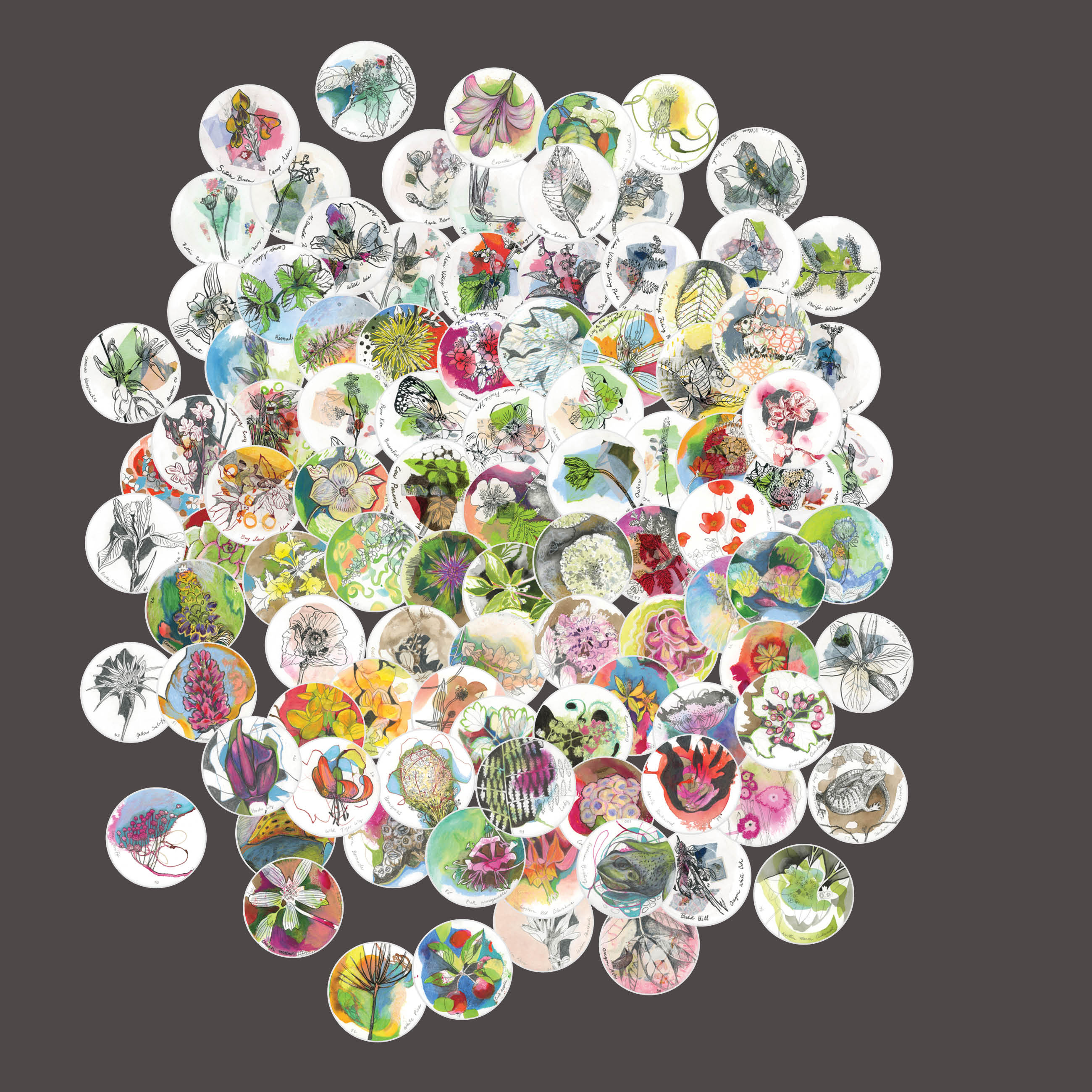
In this series, I explored a variety of methods for incorporating botanical drawing elements into my work, from ink line art to collaged elements and vibrant artist crayon markings. I learned which methods worked best for me while significantly expanding my botanical knowledge. And now, I’m incorporating much of what I learned into new work, large and small, including the 5x7-inch collages I’m working on today.
Working in Quantity
There is something freeing and gratifying about working a singular process in quantity. Whether it’s 10, 100, or 192+ (as with my “NeverEnding Story” painted block series from a few years ago)…
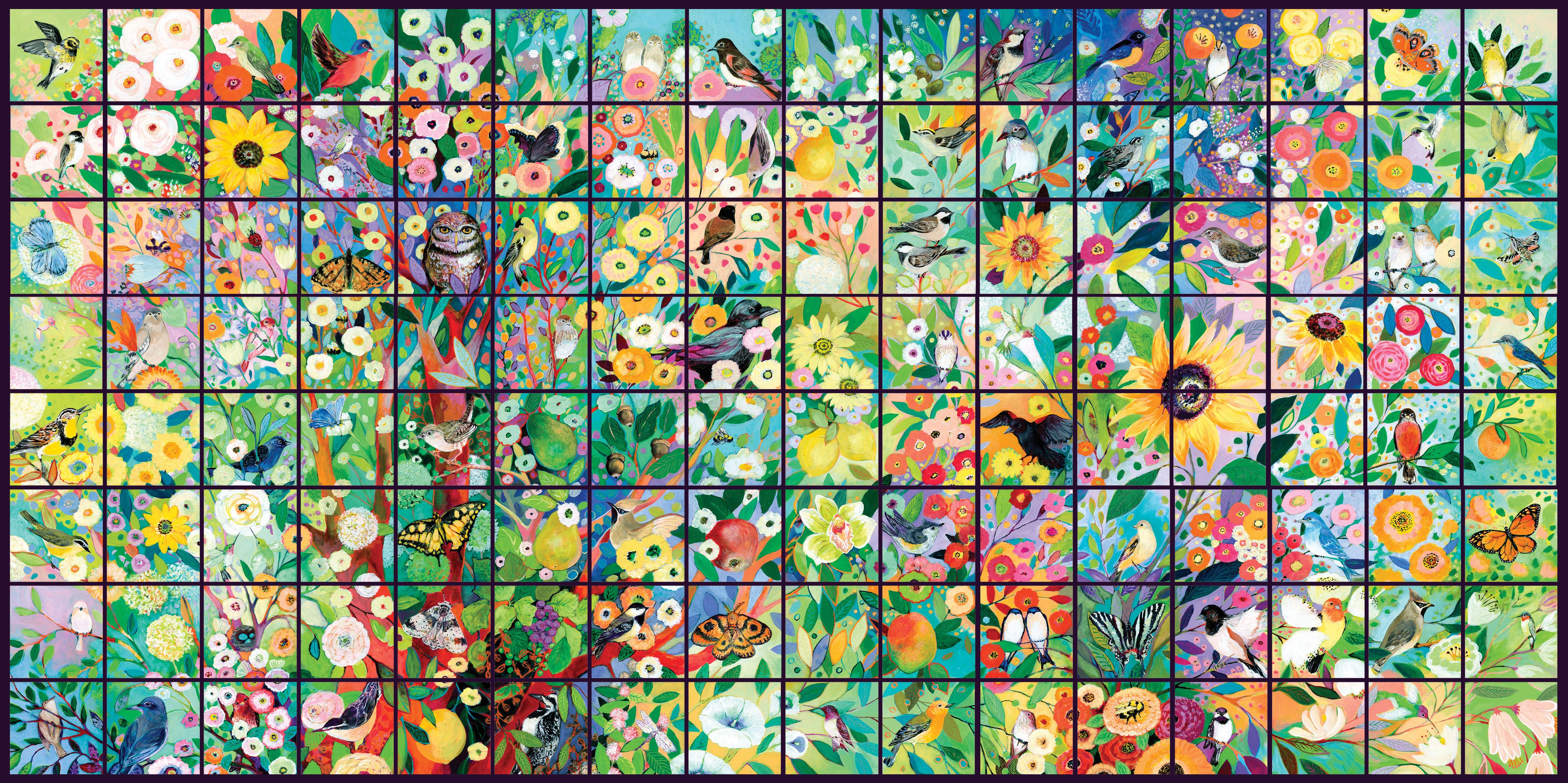
… each iteration forces a new dialogue with the materials, methods, and chosen subject, often unlocking new ideas and experiences that will inform future work.
Setting Parameters
Adding a set of parameters to the project provides additional focus. It can be as simple as limiting material choices and can include anything from setting the working size to the overall theme or intention.
NeverEnding Story Parameters
Materials: 6x6-inch birch board blocks painted with acrylic
Method: paint the blocks to fit together into vignettes as well as one larger image. Emphasis on using subject, color, and pattern to create each block as a stand-alone piece.
Subject: Birds, flowers, fruit, and (with a few early editions) - teacups!
Botanical Drawing Parameters
Materials: 5-inch round watercolor paper with (what ended up being) a variety of drawing and collaging materials, mostly including ink, crayon, graphite, and watercolor.
Method: A daily ritual - go out into the world each day for 100 days and find a botanical-themed image to photograph and use for drawing inspiration.
Subject: Flowers, plants, and a few critters.
Making Adjustments
The best part of creating your own working rules is that you’re allowed to break them! For my botanical series, I began with the intention of adding a contour drawing of the “news of the day” to situate the piece in a specific moment.


I soon realized that inundating myself with the news feed on a daily basis to find an image I wanted to draw was detrimental to my emotional well-being and to my ability to create the primary focus of spiritually satisfying botanical art. So, about half-way through the project, I stopped. (However, I did find that the contour drawing process was very satisfying and I’m already considering ways to make it a series of its own, in a more emotionally healthy way.)
The Magic
Whether it’s painting 100 thumbnails a week, writing a poetic line a day, or preparing to collage 8 more little pieces instead of stopping with the first two…
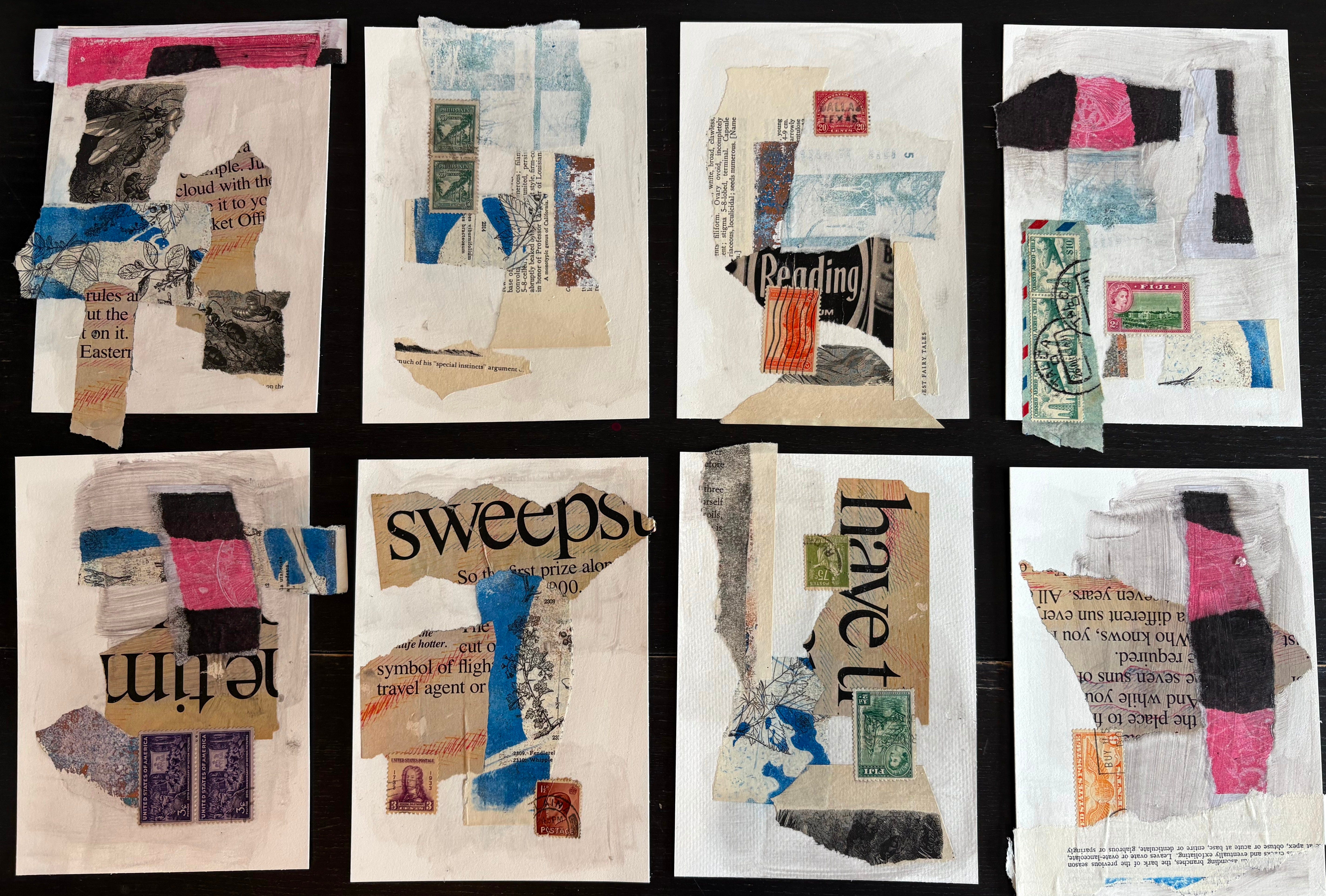
… creating in quantity allows for a level of play and experimentation that working on a single project simply can’t provide. With the pressure of creating a singular “masterpiece” removed, intuition can take over, and decisions can be fast, purposely reckless, and often, pleasantly surprising. The ones that work can be continued. The ones that don’t can be reasserted into the creative process as materials for something else or a base on which to continue working. There is a freedom that comes with repetition, and with it, that spark of creativity where all the best magic often resides.
For now, though, I’m batching the process (8 collages at a time) to fit my work table, for as many batches as my current stash of watercolor paper will allow, using the following process.
Layer 1 (pictured above): using a coordinated collection of collage materials, tear into strips and pieces and collage onto 5x7-inch watercolor paper. Allow some pieces to go off the edge.
Layer 2: Create a drawing on rice paper using graphite, water-soluble crayon, and (potentially) machine or hand-sewn details. Secure the rice paper on top of the initial collage with medium, without coating the top of the rice paper (or any stitches). Once dried, brush water on the top to create washes of color from the crayon.
Layer 3 (optional): Stitch and draw additional embellishments.


And once again, my collage table is full of possibilities.
I hope yours is too!
Happy collaging,
Jennifer
A Note to Subscribers
The next Collage O post will include a link for paid subscribers to choose a free mini collage! Stay tuned!
Collage Friday History
For 2026, I’m continuing to highlight some past favorite Collage O posts for those of you who may be new to the circle. This week, I’m sharing some tips for collaging with paint - some of which I am using with my collages above (using rice paper). I just love how every new technique we learn can be kept in a back pocket, ready to pull out whenever the need arises!
Love, love, LOVE the rice paper!!!