
A Polished Finish
Sealing and protecting your collage

Happy Collage Friday!
Instead of working on new collages today, I took some time to seal my recently completed larger collages and thought you might like to know my process.


Because these collages can be completely sealed (i.e., there are no materials or threads I’m trying to keep in their natural state), I am comfortable using a two-part process with varnish and wax to give them the best UV protection I can while preserving color intensity and enhancing texture.
Since I already use Gamblin Cold Wax as a medium with my paintings, I decided to see what their recommendation was for sealing work with this product. They have helpful information on their website here: GamblinColors.com.
Varnish
I appreciated their recommendation for varnishing the piece before adding a layer of wax. In this case, since I already had it on hand, I used Golden’s Archival Aerosol Varnish to seal the collages with a layer of UV protection (which also intensifies the colors, preventing the wax coating from dulling them). Note: It’s important to read all instructions of these products, and work in a well-ventilated area, especially when using aerosols. I typically wait for a nice day and spray outdoors, keeping any breeze at my back. I typically prefer to varnish with Gamvar (a Gamblin product) using a brush, but I wanted to make use of the materials at my disposal.
Wax
After the varnish was dry, I warmed the cold wax in a container of water (as instructed by the good folks at Gamblin). Then, using a microfiber cloth, I applied dabs of wax to the surface of my collage and gently rubbed, slowly covering the whole surface in smooth, even strokes.
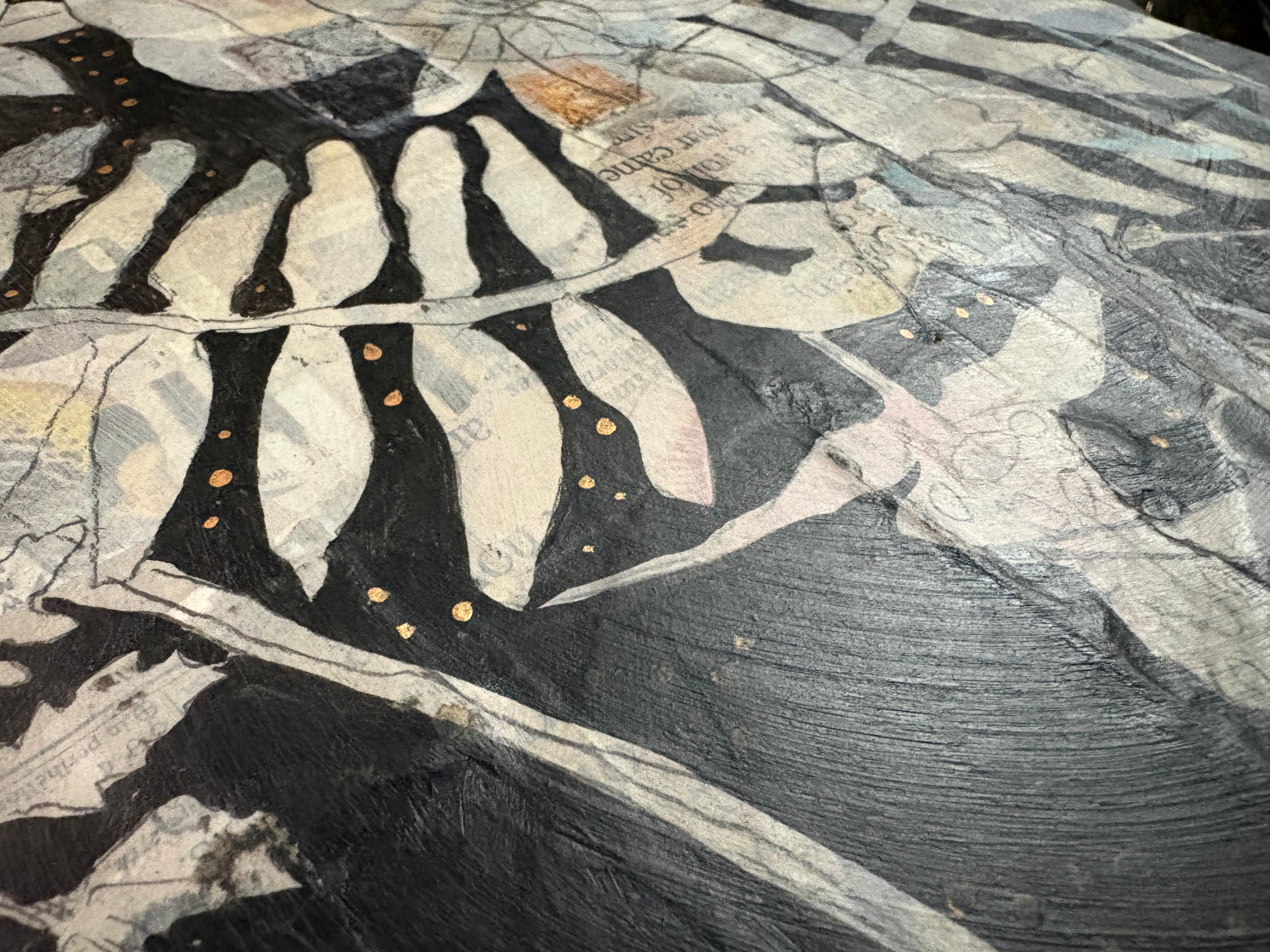
Due to the nature of this collaged piece, with its many textural elements, I decided to keep the wax a little thicker than I would with a painting, and incorporated the motion of the process as part of the piece.
Once the surface was completely covered, I had the option to dry for 4-6 hours and then buff for a glossier finish, or let it dry completely (48 hours) for a matte finish, which is what I am choosing.
While I wouldn't use this process for my smaller works on paper, I believe it’s important to protect larger works as best I can for a potential collector. However, depending on the intent of the artist (or the materials used), it’s important to understand it may be part of the lifespan of a piece to change and age over time - either deliberately or as a natural consequence.
(As a collector, it can be helpful to ask an artist how a piece should be preserved, or whether materials will evolve or degrade over time. As a general rule, I always recommend refraining from hanging original work in direct sunlight or high moisture areas, and keeping it in a temperature-controlled location.)
The pieces I finished today, however, I hope will endure in their original state, and by protecting them now, I am giving them a good chance at a long life in their future forever home.
Have questions? Prefer a different approach? I’d love to hear how you protect your collage work!
Happy collaging,
Jennifer
Collage Friday History
For 2026, I’m continuing to highlight some past favorite Collage O posts for those of you who may be new to the circle. This week, I’m sharing some collages using cold wax from the archives!